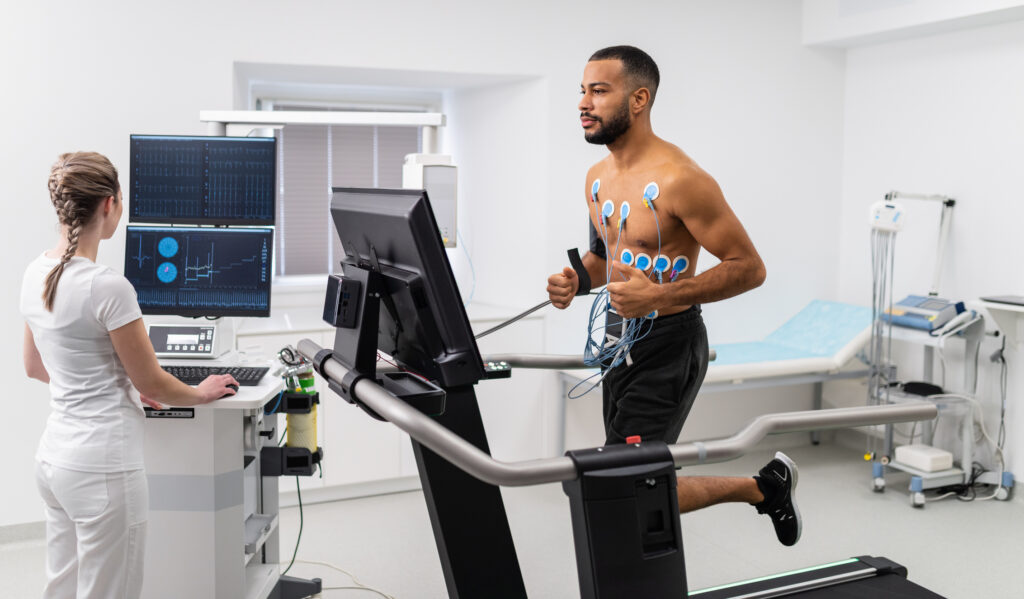
Athlete does a cardiac stress test in a medical study, monitored by the female doctor.
Maximizing Machinery and Plant Performance through an Integrated Approach
In today’s manufacturing and process industries, achieving optimal operational performance while minimizing downtime is crucial for staying competitive. A transformative way to accomplish this is by adopting an integrated approach that combines advanced sensors, data analytics, machine learning, and predictive maintenance strategies. Here’s a clear overview of how this system works and why it is essential for modern plants.
The Foundation: Holistic Plant and Machinery Design
Imagine a plant where each machine is part of a well-coordinated ecosystem. Designing individual machinery with integrated interfaces ensures that all components communicate smoothly. This connectivity turns a collection of machines into a single, intelligent plant system. Embedding sensors everywhere across the plant helps in gathering real-time data on everything—from temperature and pressure to vibrations and loads.
Monitoring Real-Time Load and Condition Changes
As machinery ages or workload fluctuates, their operational stresses change. Keeping track of these variations using sensors provides critical insights. For example, if a machine starts operating under higher stress levels than usual, it could be a warning sign. If adjustments are made—like changing operating parameters—continuous monitoring helps understand their impact on performance and stress levels.
Deploying a Network of Sensors for Comprehensive Insight
Long-term success depends on covering every critical point in the plant. Additional sensors across machinery and systems track parameters under different operational conditions. Establishing pre-defined safe operating limits based on this data ensures that machines work within optimal stress ranges. If any parameter exceeds these safe boundaries, early alarms can trigger corrective action.
Turning Data into Action: Advanced Analytics & Machine Learning
The true power of this approach lies in analysing the massive amounts of data collected. Modern engineering techniques like Big Data analytics help sift through complex datasets to identify patterns and trends. AutoML (Automated Machine Learning) further automates the creation of predictive models that can forecast potential failures before they happen.
Regression analysis and other predictive tools help estimate future performance based on current data. For instance, if vibration levels tend to rise gradually as a machine approaches failure, predictive models can alert maintenance teams to act in advance.
Why Is This Approach a Game-Changer?
Increased Reliability & Safety: Continuous monitoring and early failure prediction prevent catastrophic breakdowns.
Lower Maintenance Costs: Scheduled repairs during planned downtimes are cheaper than emergency repairs caused by unexpected failures.
Enhanced Efficiency: Real-time feedback allows operators to adjust processes for optimal performance.
Learning and Improvement: AutoML models improve over time, becoming more accurate as they learn from ongoing data.
The Big Picture: Smarter, Safer, and More Productive Plants
By combining sensor data, advanced analysis, and predictive modelling, plants become smarter. They can proactively manage operational stress, predict failures before they occur, and schedule maintenance optimally. This integrated approach ultimately leads to higher uptime, safer working conditions, and better resource utilization.
Conclusion
Incorporating an integrated, data-driven system in machinery and plant management is no longer optional; it’s essential for modern industry. This strategy not only optimizes performance but also dramatically reduces failures and costs. Embracing such technology is the key to building resilient, efficient, and future-ready manufacturing plants.
According to leading consultancy firms, consulting is defined as a professional service that involves providing expert advice, insights, and solutions to organizations to help them improve their performance, solve complex problems, and achieve their strategic objectives.
For example:
• McKinsey & Company describes consulting as “a collaborative problem-solving process where consultants leverage their expertise, data, and methodologies to help clients address specific challenges and unlock opportunities.” • Boston Consulting Group (BCG) defines consulting as “the practice of supporting organizations in developing strategies, optimizing operations, and enabling transformation through tailored advice and actionable recommendations.” • Deloitte emphasizes consulting as “a strategic partnership where consultants assist clients in designing, implementing, and sustaining innovative solutions to business challenges.”
Overall, leading firms view consulting as a strategic, collaborative engagement aimed at delivering measurable value and fostering sustainable growth for clients.
These firms have also identified the 5 Stages of Consulting.
1. Entry and Diagnosis:
o Building Rapport: Establish trust and a positive relationship with the client. o Understanding the Context: Learn about the client’s organization, culture, and specific concerns. o Defining Problems: Clarify what issues need to be addressed through initial conversations and observations. o Setting Objectives: Agree on the goals and scope of the consulting engagement.
2. Data Collection and Analysis:
o Gathering Data: Use methods such as interviews, surveys, observations, and document reviews to collect relevant information. o Analyzing Information: Identify patterns, root causes, and key factors affecting the client’s situation. o Validating Findings: Confirm data accuracy and relevance with stakeholders to ensure a clear understanding.
3. Action Planning:
o Developing Solutions: Brainstorm and design strategic, operational, or organizational solutions based on analysis. o Prioritizing Actions: Determine which actions will have the most significant impact and are feasible. o Creating an Implementation Plan: Outline steps, timelines, resources, and responsibilities for executing solutions.
4. Implementation:
o Executing the Plan: Work with the client to put strategies into practice, manage change, and address challenges. o Supporting Change: Facilitate training, communication, and support to ensure acceptance and adoption. o Monitoring Progress: Track the implementation process and make adjustments as needed.
5. Evaluation and Follow-up:
o Measuring Outcomes: Assess whether the objectives were achieved and the solutions are effective. o Providing Feedback: Share evaluations with stakeholders and discuss successes and areas for improvement. o Ensuring Sustainability: Establish practices or systems to maintain improvements and plan for future development.
This structured process helps ensure that consulting efforts are targeted, effective, and geared toward sustainable success.
The Subsea Risk Management Consultant plays a crucial role in ensuring the safety, integrity, and efficient operation of subsea assets throughout their lifecycle. This individual provides specialized expertise in risk management, drawing upon industry best practices and frameworks to identify, assess, and mitigate risks specific to the subsea environment. Facilitates comprehensive risk assessments for subsea projects, leveraging tools and techniques from the industry recognised Recommended Practice (e.g., HAZID, HAZOP, FMEA/FMECA).
Risk Assessment and Hazard Identification and 2. Integration with SMS Framework:
Identifies potential hazards related to subsea installations, pipelines, umbilical’s, and equipment, considering factors such as:
Evaluates the likelihood and consequence of identified hazards, establishing a risk profile for each project.
Ensures alignment of subsea risk management activities with the organization’s overall Operating Management System (SMS) framework.
Contributes to the development and maintenance of SMS elements related to subsea operations, particularly those focused on:
Commitment and Accountability
Risk Assessment and Control
Asset Design and Integrity
Plans and Procedures
Monitoring, Reporting, and Learning
Contractual Risk Management:
Assesses contractual risks associated with subsea construction, installation, and maintenance projects, adhering to IMCA guidelines.
Provides input on contract negotiations to ensure appropriate allocation of risks between operators and contractors, with a focus on:
Contractor SWOT Analysis
HSSE Management
Performance Risk
Financial Risk
Geo-Political Risks
Ensuring NO damage to subsea assets
Liability for undesired events
Warranty obligations
Force majeure clauses
Termination conditions
Change and Deviation Management
Delays and Impact Analysis ; dynamic decision making to keep the Project moving along in the event of unforeseen hinderances and obstacles.
Documentation Review
DPR Reporting
Development and Implementation of Risk Mitigation Measures:
In conjunction with Project Manager and Subsea Engineer Develops and recommends risk mitigation strategies tailored to the specific characteristics of each subsea project, drawing upon industry best practices and engineering expertise.
Ensures that risk mitigation measures are implemented effectively and are subject to ongoing monitoring and review.
Coordinates with engineering, operations, and HSE teams to integrate risk mitigation into all aspects of subsea project planning and execution.
Monitoring, Reporting, and Learning:
Establishes and maintains a system for tracking subsea incidents, near misses, and safety observations.
Analyses incident data to identify root causes and trends and recommends corrective actions to prevent recurrence.
Contributes to the organization’s experience transfer process, sharing lessons learned from subsea projects to promote continuous improvement.
Compliance and Auditing: *Ensures compliance with all applicable regulatory requirements, industry standards, and internal policies related to subsea risk management. *Participates in audits of subsea risk management processes and procedures, identifying areas for improvement.
RACI Definitions:
R (Responsible): The person who does the work to complete the task.
A (Accountable): The person who is ultimately answerable for the correct and thorough completion of the task. Only one ‘A’ can be assigned per task.
C (Consulted): The person whose opinions are sought; two-way communication.
I (Informed): The person who is kept up-to-date on progress; one-way communication.
Key Considerations:
Subsea Consultant’s Central Role: The Subsea Consultant frequently holds both Responsible and Accountable roles. They possess specialized subsea knowledge and oversee the integrity and effectiveness of the risk management process.
Project Manager’s Ownership: The Project Manager retains overall accountability for the project’s success, including ensuring adequate resources and adherence to the RMP. They’re frequently responsible for tasks with organization aspects.
Subsea Engineer’s Technical Contribution: The Subsea Engineer provides essential technical input and implements the engineering aspects of risk mitigation. The engineer is focused on operational side to maintain stability and effectiveness.
This is by NO means a comprehensive cover of the spectrum of role and responsibility of a subsea consultant, just a brief glimpse suitable for a BLOG.