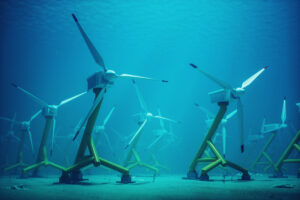
Underwater turbines for tidal power.
Tidal energy is a fascinating and promising source of renewable power that taps into the natural rise and fall of ocean waters—an endless, predictable force of nature. Imagine standing on a coast, watching the ebb and flow of the tide; that rhythmic movement is more than just a scenic view — it holds tremendous potential to generate electricity in a sustainable way.
Why Tidal Energy Matters : As the world shifts towards cleaner energy sources, tidal power offers a compelling solution. Unlike solar or wind, tides are incredibly predictable because their patterns are governed by the gravitational pull of the moon and the sun. This reliability makes tidal energy a dependable part of a diversified renewable energy portfolio.
How Does It Work? : Tidal energy harnesses the movement of seawater through specially designed turbines installed in tidal streams, estuaries, or coastal areas with significant tidal ranges. When the tide comes in, water flows through these turbines, spinning generators much like wind turbines do. When the tide recedes, the process reverses, allowing for a continuous cycle of energy production.
The Human Connection : Communities living near tidal energy sites can benefit immensely. Not only does this form of power generation reduce dependence on fossil fuels, but it also offers the opportunity for local economic development—creating jobs in engineering, maintenance, and technology. Moreover, tidal farms tend to have a low environmental footprint, helping protect maritime ecosystems while providing clean energy.
Challenges and Opportunities : Of course, tidal energy isn’t without its hurdles. Building turbines durable enough to withstand harsh marine conditions and ensuring minimal environmental impact are ongoing challenges. However, technological advances are rapidly improving efficiency and reducing costs. Countries like the UK, Canada, and South Korea are already exploring and investing in tidal projects, signalling a growing confidence in this eco-friendly power source.
A Bright Future Looking ahead, tidal energy represents not just a scientific breakthrough but a hope for a cleaner, more sustainable future. By listening to the natural rhythms of the Earth, we can create energy solutions that respect our planet’s delicate balance—turning the ocean’s powerful tides into a reliable partner in our quest for green energy.
The depths of installation for tidal energy infrastructure can vary widely depending on the specific site, type of technology used, and environmental conditions. Here’s an overview:
Typical Installation Depths in Tidal Energy Projects
- Turbine Foundations and Subsea Structures: These are generally installed in waters ranging from 10 meters (33 feet) to 50 meters (164 feet) deep for many fixed-bottom systems. In some cases, especially in more open or challenging environments, installations can be in waters exceeding 50 meters.
- Floating Turbine Systems: These are designed for deeper waters, often exceeding 50 meters (164+ feet), since floating turbines are not constrained by the seabed. They can be installed in depths of more than 100 meters (328 feet), allowing access to otherwise unreachable sites.
- Subsea Cables: Laying subsea cables typically occurs in depths from 10 meters (33 feet) up to around 100 meters (328 feet) or more, depending on the route and seabed conditions. In some high-seas or deep-sea sites, cables are laid at depths exceeding 200 meters (656 feet).
- Installation Equipment and Vessels: Specialized vessels are used for foundation installation and cable laying, capable of operating in a variety of depths, including very deep waters with advanced dynamic positioning systems.
Subsea Infrastructure
- Beneath the surface, the subsea infrastructure is where the real technical magic happens. It includes:
- Subsea Cables: Specially designed to endure corrosion, pressure, and marine life, these cables connect turbines to the offshore substation or directly to the shore. Their design minimizes environmental impact and maximizes longevity.
- Foundation Structures: Depending on the site, foundations can be monopiles, gravity-based structures, or more innovative types like tripod or jacket foundations. They secure turbines to the seabed, supporting the machinery against environmental forces.
- Turbine Mountings and Support Frames: These secure the turbines in position and may include damping systems to absorb vibrations and movements caused by ocean dynamics.
- Subsea infrastructure is critical to the success and longevity of tidal energy projects. It includes foundations, subsea cables, and support structures, all of which require regular maintenance to ensure optimal operation. The installation process and subsequent maintenance are closely linked, often involving specialized vessels and procedures.
Subsea Installation Scope:
- Site Surveys: Detailed mapping of seabed conditions to determine the best locations for foundations and cables.
- Foundation Installation: Using specialized vessels to install monopiles, gravity-based structures, or other foundation types based on site conditions.
- Cable Laying: Deployment of subsea cables with precision to avoid damage, using cable-laying vessels that carefully route cables along predetermined paths.
- Turbine Placement: Fixed or floating turbines are installed and securely attached to foundations or anchors.
- Cable stabilisation and Protection: subsea and onshore approach – trenching.
- Testing & Commissioning: Ensuring all equipment functions correctly before entering full operation.
Installation in tidal zones pose a great challenge for installation works, due to tides and low visibility.
Subsea Maintenance Scope:
- Visual Inspections: Using remotely operated vehicles (ROVs) or autonomous underwater vehicles (AUVs) to conduct visual inspections of cables, foundations, and turbines.
- Corrosion Protection & Coating Repairs: Regular checks and repairs to prevent or address corrosion, especially for cables and metallic structures.
- Cable Repair & Replacement: Conducted if damage or wear is detected, often involving ROVs or divers for access.
- Foundation and Structural Integrity Monitoring: Remote sensing and sensor systems to monitor vibrations, movements, or damages, ensuring the stability of foundations and turbines.
- Vibration and Noise Monitoring: Ensuring turbines operate within safe parameters to prevent mechanical fatigue.
- Cleaning and Debris Removal: Removing marine growth or debris that can affect performance or cause damage.
- Subsea maintenance is vital for maximizing the lifespan of tidal energy assets, reducing downtime, and preventing costly failures. Maintenance activities are typically scheduled based on inspection data and can be performed using specialized vessels, ROVs, or divers, depending on depth and complexity.
Top Tidal Zones :
-
- Bay of Fundy, Canada – Tidal Range: Up to 16 meters (52 feet)
- Ungava Bay, Canada – Tidal Range: Around 14 meters (46 feet)
- Loch Linnhe, Scotland – Tidal Range: About 10 meters (33 feet)
- Mont Saint-Michel Bay, France – Tidal Range: Approximately 14 meters (46 feet)
- Ungava Bay, Canada – Tidal Range: Up to 14 meters (46 feet)
- Bay of Bengal, Bangladesh and India – Tidal Range: Typically, 4 to 6 meters (13 to 20 feet)
- Gulf of Tonkin, Vietnam – Tidal Range: About 4 meters (13 feet)
- Yellow Sea (China & Korea) – Tidal Range: Ranges from 2 to 4 meters (6.5 to 13 feet)
- Luzon Strait, Philippines – Tidal Range: Up to 5 meters (16 feet) in some areas
- Coral Triangle (Indonesia, Philippines, Malaysia) – Tidal Range: Generally, 1 to 3 meters (3 to 10 feet
Conclusion : Tidal energy reminds us that nature often holds the answers to our most pressing challenges. Its promise lies in its sustainability, predictability, and harmony with the environment. As technology advances, tidal power could become an integral part of our transition to a more sustainable world—harnessing the ocean’s endless energy in a way that benefits both people and the planet.